
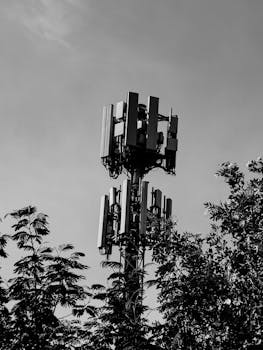
5G Technology Explained: How It Impacts Speed, Work, and Connectivity
Imagine stepping into a coffee shop where your phone downloads a movie in seconds. This kind of everyday magic flows from the 5g technology benefits we rarely pause to consider.
Networks shape everything from quick work calls to seamless gaming. The shift to 5G brings more than just faster speeds; it transforms how we interact with the world—at home, work, and play.
Curious how 5G technology benefits your everyday routines or business workflows? Explore the sections below for clear answers and examples you can try right away.
Understanding 5G: The Fundamentals That Drive Change
This section reveals why 5G feels so different and introduces you to its rules, from basic speed metrics to the smart engineering inside your device.
By understanding core 5g technology benefits, you’ll know what to expect, whether streaming a movie or checking in at a connected workplace terminal.
Breaking Down 5G Signals and Frequencies
5G uses a unique blend of low, mid, and high frequencies to route signals faster. Phones select the right band on the fly, prioritizing speed or coverage.
When standing in a crowded stadium, your phone might lean on low-band 5G, which covers broad areas. Near a tiny antenna in the city, mid-band 5G gives smooth streaming.
This adaptive tuning is central to 5g technology benefits, as the phone and network adjust in real-time based on your location and activity.
Latency and Real-Time Response in Action
5G’s average latency can dip under 10 milliseconds—a blink for humans. This near-instant response lets workers coordinate robots, or friends play high-speed games online.
Imagine a surgeon in New York guiding a robot in Texas. With 5g technology benefits, there’s barely any lag, which can make all the difference in delicate operations.
This reliable speed is part of what turns simple mobile devices into tools for remote work and mission-critical tasks worldwide.
| Network Type | Max Download Speed | Typical Latency | Takeaway for Users |
|---|---|---|---|
| 3G | 10 Mbps | 100 ms | Use for basic browsing when other options fail |
| 4G LTE | 100 Mbps | 50 ms | Good for HD video and calls—limited for gaming or IoT |
| 5G Low-Band | 250 Mbps | 20 ms | Stream video, join calls, and handle large file downloads |
| 5G Mid-Band | 900 Mbps | 10 ms | Great balance for business, video, and smart home devices |
| 5G mmWave | 2 Gbps | 5 ms | Ultra-fast for stadiums and cities; use with compatible phones |
Everyday Scenarios: 5G’s Role at Home, Work, and Public Spaces
After reading this section, you’ll spot the invisible hand of 5g technology benefits shaping decisions from choosing a Wi-Fi alternative to arranging telehealth appointments at home.
5G replaces traditional landlines for remote workers and gives mobile video callers HD-quality streams without jitter. Families use 5g technology benefits when kids stream different cartoons while meetings happen in the next room.
Commuting and Smart Cities: Mini-Story of a User
Lena’s watch unlocks her office while her phone maps a bike-friendly route—5g technology benefits let her devices share real-time traffic updates and alerts in seconds.
The same connection helps city buses adjust signals so she’s not late. Her city’s air quality monitors also sync instantly, keeping her informed on her route each day.
- Replace home broadband with fixed wireless: Reliable for apartments without fiber lines—plug-and-play modems use 5G where cable is unavailable, supporting streaming and work calls.
- Try remote video care: Telehealth apps load quickly with 5g technology benefits, connecting with doctors through HD video with minimal waiting, even in busy neighborhoods.
- Connect more smart devices: Add sensors, speakers, and lights—all on the same wireless bill, thanks to 5G’s improved bandwidth and device density.
- Access fast downloads for video games: New titles or large updates complete in minutes rather than hours, smoothing out family disputes over shared internet.
- Work on the go: Download contracts or upload videos from parks or travel hubs, making freelance and remote work practical beyond standard office Wi-Fi coverage.
With so many 5g technology benefits at home, mobile convenience now rivals even wired internet setups from a few years ago.
5G at Events and Crowds: Real-World Use
Concertgoers record events and share live feeds without buffering. Sports fans check stats while still in their seats, thanks to localized 5g technology benefits like mmWave antennas.
Organizers can track ticketing and safety, while food kiosks use connected sensors to keep orders moving when lines spike. It all stays smooth even with thousands online.
- Share event moments instantly: No more lag while posting photos or videos—5G keeps uploads quick and clear for friends or social feeds.
- Stream event coverage in HD: Watch multiple camera angles live on-site, staying connected to the action on your device without delay or freezing frames.
- Check real-time seat upgrades and offers: Apps show in-seat deals only available to 5G-connected fans, enhancing the event experience at stadiums or theaters.
- Use tap-to-pay quickly at concession stands: Avoid payment lines—5g technology benefits keep wireless transactions consistent, even if the stadium is packed.
- Access maps or safety info at large venues: Use 5G-powered apps for crowd alerts, exit routes, or finding lost items, making every big outing smoother and safer.
These 5g technology benefits make live gatherings feel less frustrating, even as more people expect fast, always-on service everywhere they go.
Reimagining Work: 5G’s Game-Changing Impact on Remote and Onsite Teams
Reading this section equips you with steps and scripts for integrating 5g technology benefits into both traditional offices and flexible workspaces.
Teams unlock higher-quality video calls and swap large design files, as low-latency 5G shrinks meeting times and expands where work happens—like construction sites or delivery hubs.
5G Team Collaboration Scripts
When updating a shared presentation, say, “Let’s upload this design to the drive while we review it together”—5G cuts downtime, so feedback feels immediate, not delayed.
For troubleshooting, a field worker streams live video and narrates, “Watch my screen as I scan this equipment”—a remote expert sees details in real time, not after a lag.
These 5g technology benefits boost team trust and save time on explainers or do-overs, because the information is fresher and clearer for everyone.
Managing Devices and Data Securely
IT managers create checklists: “Update your work phone’s security, connect only to company 5G, and run our verification app” to keep access safe but simple for staff.
Set clear rules: “Don’t use public Wi-Fi for sensitive tasks when a 5G connection is available.” This taps into 5g technology benefits like built-in encryption and authorized device lists.
Regular reminders about 5G data plans, device updates, and strong passwords make the workplace more resilient against the biggest mobile threats.
Concrete Examples: Specific Ways 5G Changes Daily Routines
This section helps you spot practical 5g technology benefits, from ride-share drivers rerouting around traffic jams to families syncing calendars and smart fridges without friction.
Real-life stories reveal just how broad the impact is for regular people and businesses alike.
Freelancers, Creators, and Multitaskers
A video editor uploads gigabytes over coffee, telling a client, “Your project’s ready before lunch, thanks to speedy 5G.” Hobbyists stream dual channels—one for gaming, one for chat.
Musicians collaborate through mobile apps, layering tracks with zero lag. Writers join editors over live video, even while riding in a carpool, thanks to consistent connections.
These creative workflows rely on 5g technology benefits to keep everyone smooth and present—even when speed or stability once limited what was possible outside the office studio.
Connected Vehicles and Real-Time Navigation
Delivery drivers receive instant traffic alerts, rerouting in seconds. Commuters set up “auto-adjust” scripts: “Update my route every five minutes as traffic changes,” making city travel more efficient.
Passengers sync playlists and podcasts to in-car entertainment. When the weather turns, vehicle safety sensors instantly report back to traffic networks, cutting wait times at red lights.
These 5g technology benefits turn cars into rolling command centers, ensuring flexibility and safety while keeping everyone entertained on the journey.
Comparing Device Readiness: Picking the Right 5G Gear
As you finish this section, you’ll know how to match 5g technology benefits with your next device upgrade and avoid buying gear that underdelivers or bottlenecks your connection.
Follow the mini checklist below so your device supports all three core 5G bands and can use advanced carrier features.
- Check your phone for 5G logo: Look in the status bar on the home screen or in your device’s settings under Mobile Network Options.
- Ask for mid-band support: Not all “5G” phones use mid-band, which balances coverage and ultra-fast speeds; look for carrier info or model specs on your provider’s website.
- Confirm mmWave compatibility if in a big city: This unlocks the fastest speeds, especially if you live near stadiums or downtown areas with visible 5G antennas.
- Update device firmware regularly: Manufacturers push 5g technology benefits through new software updates—install the latest for security and faster performance.
- Request a 5G SIM when upgrading: A new SIM card ensures you tap into carrier features like network slicing or smart handoff between 5G, 4G, and Wi-Fi.
Checking these details means you won’t miss out on core 5g technology benefits, and you’ll position yourself for future improvements as networks grow more advanced.
Comparing 5G with Other Wireless Technologies and Fixed Broadband
This section provides you with immediate comparisons so you can choose the network that matches your speed, mobility, and reliability needs today.
| Technology | Mobility | Typical Speed | Best Use Case |
|---|---|---|---|
| Wi-Fi 6 | Low (Stationary) | 1 Gbps | Home, offices with many static devices |
| 4G LTE | High | 100 Mbps | Travel, voice calls, basic app use nationwide |
| 5G | High | 250 Mbps – 2 Gbps | Mobility plus high speed for video, collaboration, IoT hubs |
| Cable Broadband | None | 200 Mbps – 1 Gbps | Homes, game consoles, offices with stationary devices |
| Fiber | None | 1 Gbps+ | Stream, host servers, work from home, telehealth over fixed locations |
For families needing mobility, the 5g technology benefits of combining speed and coverage outpace traditional broadband for most activities outside the living room.
Looking Forward: What 5G Means for Every Connected Person
5g technology benefits shape our experiences, from handling a crisis call with perfect clarity to enjoying lag-free video. These changes ripple across work, fun, and even safety protocols.
As cities, businesses, and homes adopt 5G, expect faster adaptations and smoother tech upgrades. Connected devices and sensors will interact in ways we can’t yet script or imagine.
Staying informed on new 5g technology benefits ensures you’re ready to adopt the next device or app that promises to streamline your life and work.


